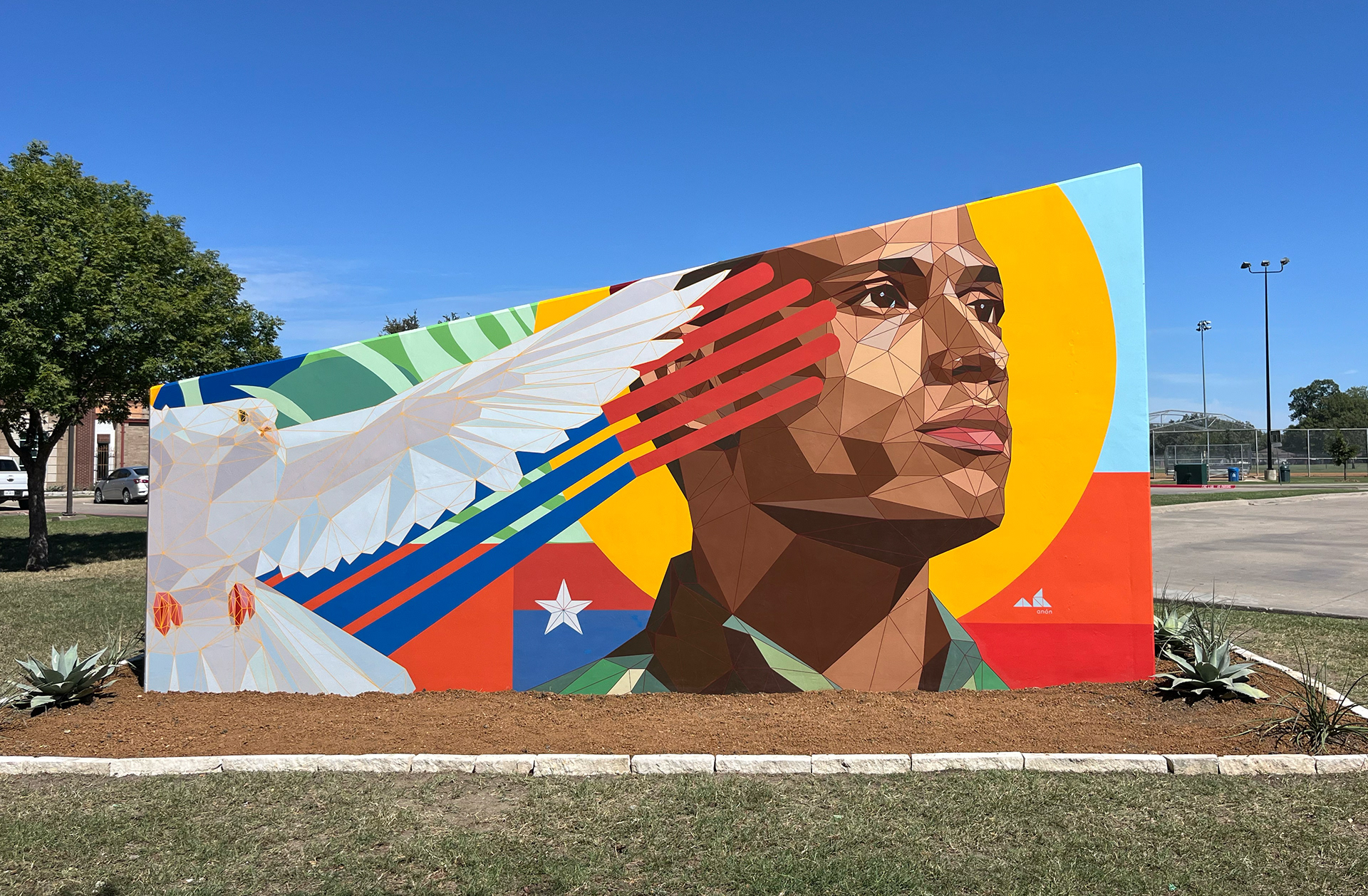
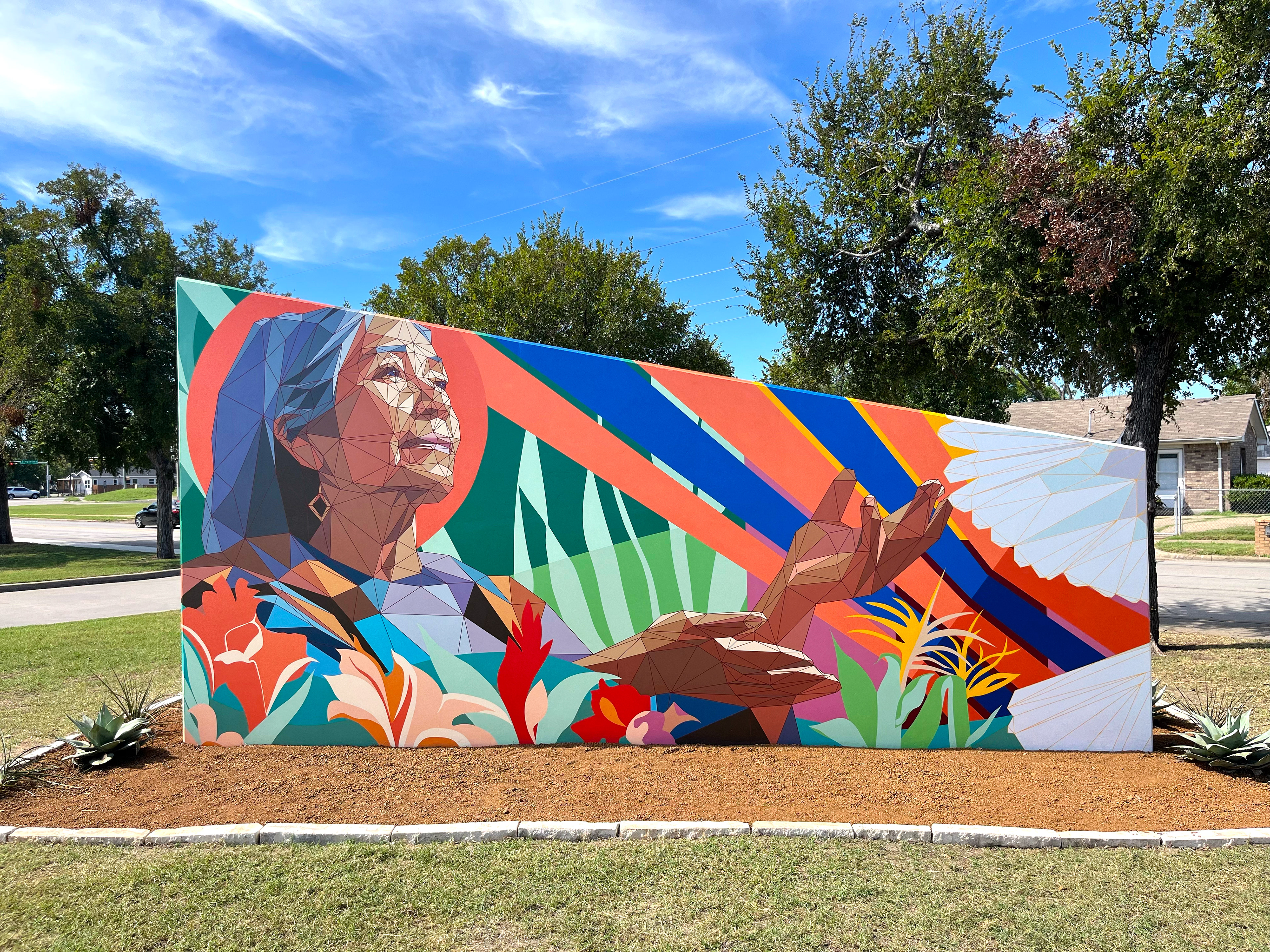
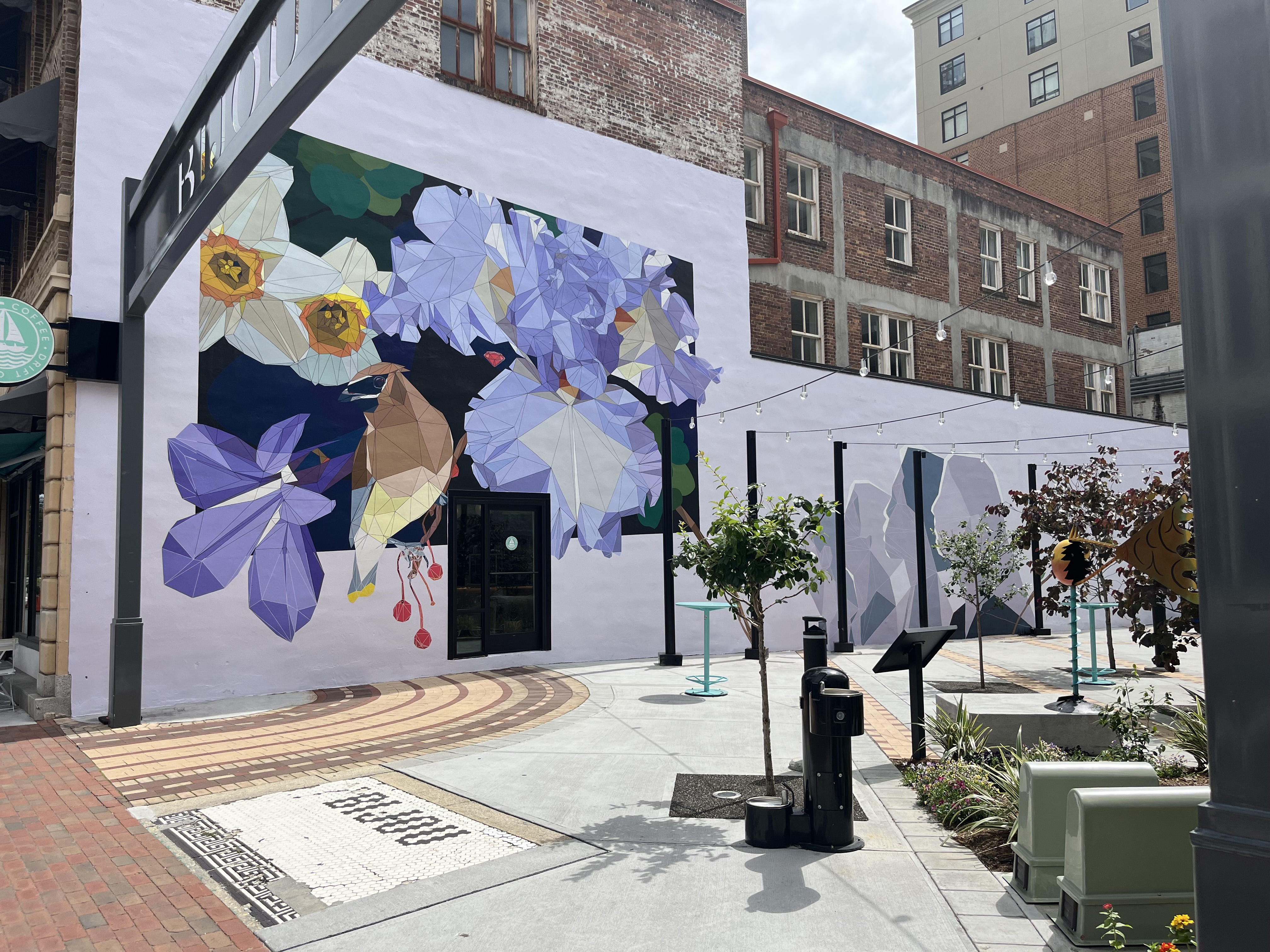
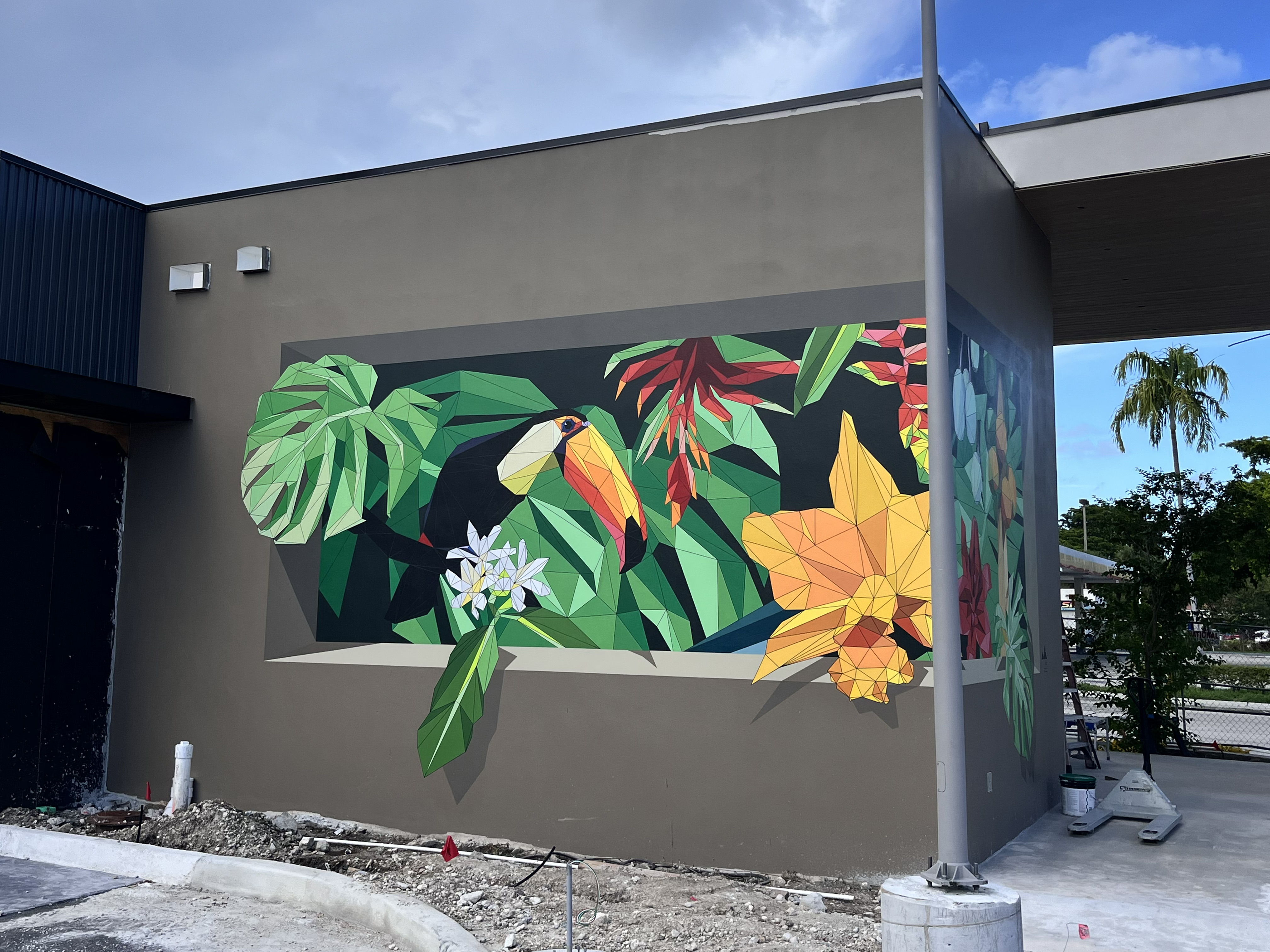
Cities commission murals, artists paint them, and when it goes up it's celebrated and photographed. Then the system stops because there usually isn't a maintenance schedule, inspection cycle, and nobody watching the paint age. By the time a mural looks faded most people assume it's gone, but usually the pigment is still sitting under a failed binder caused by everything the environment throws at it. Unfortunately, without a path forward, cities repaint and the original work is lost.
In 2017, a city in Palm Beach County, Florida commissioned a six-figure legacy large-scale mural by a world-class artist. Six years later, environmental damage had set in and someone had tagged the lower portion. The city reached out to the artist, who quoted a six-figure repair. Not able to afford it, they commissioned another artist and painted it over instead.
Less than ten years later, they had spent significantly more than the original six-figure investment, and were left with a replacement of something they never wanted to replace. The one thing they changed the second time around was adding a protective coat to the new mural, the very step that could have saved the first.
Let's run a hypothetical:
A city commissions a 40′ × 30′ legacy mural for $160,000. Six years later the binder is failing and the color begins to read flat. On inspection, the city finds there's no topcoat on the mural. With this in mind, let's talk about the four paths, all of them occurring before the ten-year mark.
Let it fade
$160,000+
The original investment + the cost to eventually paint over the mural and repair the wall.
Enjoy the mural while it lasts. The investment retires years ahead of schedule as the fading grows more visible, and the unprotected surface keeps absorbing sun, weather, and whatever else shows up.
Rehire the artist
~$280,000
The original investment + the cost to revive or repaint.
The artist comes back and, hypothetically, charges roughly $120,000, around 75% of the original investment, to work their magic. If a topcoat is requested this time, graffiti shouldn't be much of a problem going forward as long as the coat is anti-graffiti, but the work is still subject to environmental exposure so it will eventually wear out. The mural gets another six or seven years.
New commission
~$224,000+
The original investment + painting over + the new mural.
Say hiring the original artist is outside the current budget. The city commissions a different artist at 40% of the original investment, paints over the original, and repairs the wall before the new work starts. The original piece and what it meant to the neighborhood is gone, but a replacement is in place.
Preserve it
Priced like maintenance
maintenance < commission
If within the preservation window, the intended luster usually comes back and the mural's life extends by seven-plus years, with the option of a maintenance cycle that treats it every six years so it keeps serving the people as it was meant to.
Commission figures are illustrative. Preservation is scoped per wall, by size, condition, access, and number of murals treated.
Preservation is priced like maintenance,
not like a new commission. What a relief.